International Trade & Security Law: The U.S. TikTok Divestiture Mandate
LegalRobe Editorial
Legal Tech Insights
The Core Issue: Balancing national security and data sovereignty against First Amendment rights and international trade.
In 2024, the U.S. government passed the Protecting Americans from Foreign Adversary Controlled Applications Act (PAFACA). The law explicitly targeted TikTok and its Chinese parent company, ByteDance, giving them a strict deadline to sell the app's U.S. operations to American owners or face a nationwide ban.
Legal Analysis:
The legal battle centered on national security versus free speech. Critics argued a ban would violate the First Amendment rights of millions of American users. However, the U.S. government framed the law not as a restriction on speech, but as a regulation of foreign adversarial control over critical data infrastructure. The primary concern was that the Chinese government could legally compel ByteDance to hand over American user data or manipulate the algorithm to conduct influence operations.
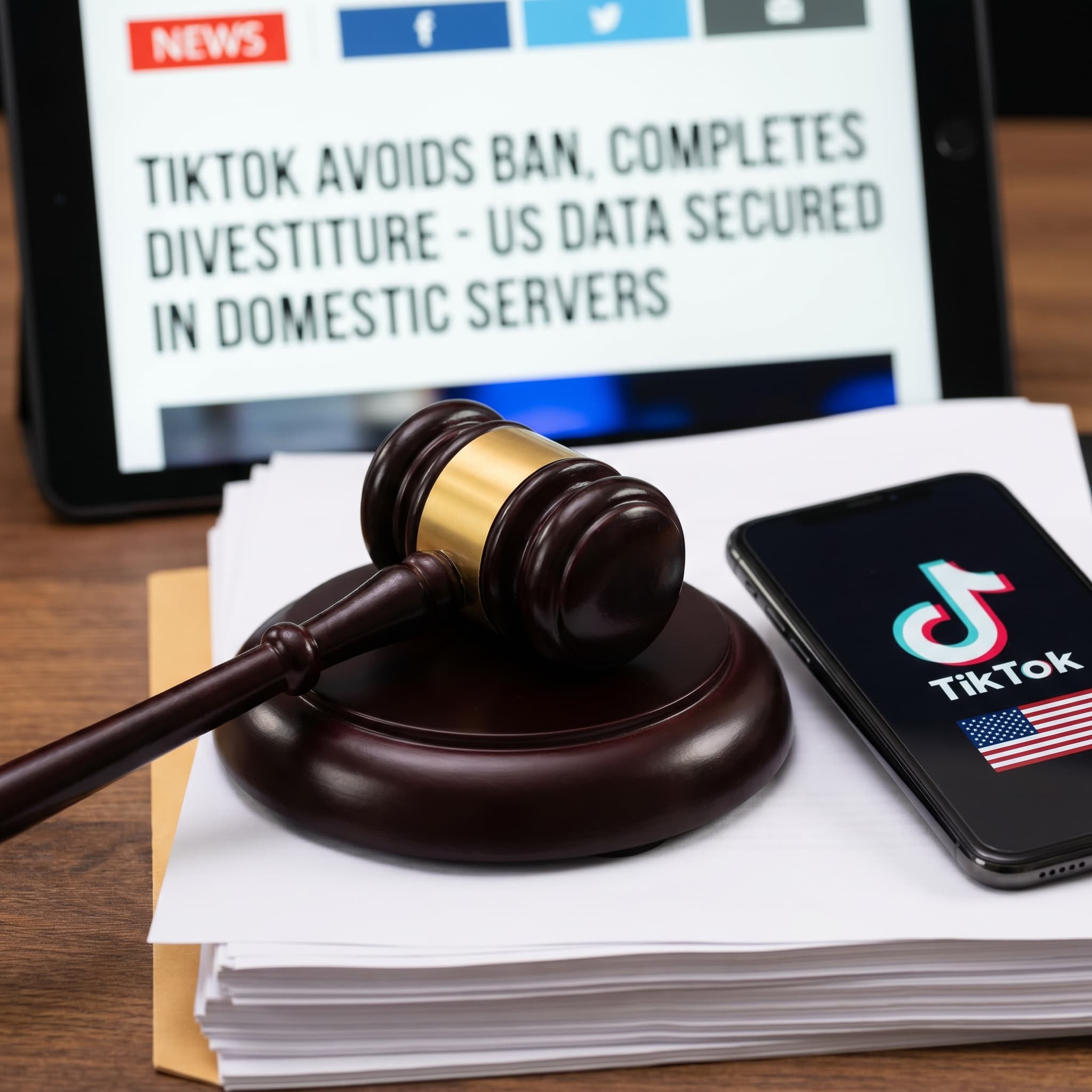
The situation reached its legal conclusion in early 2026. Following executive delays to allow for negotiations, TikTok underwent a "qualified divestiture." The U.S. operations were spun into a new entity where ByteDance retained less than a 20% stake, majority ownership was transferred to American investors, and all sensitive U.S. user data was legally mandated to be stored on domestic cloud servers, effectively ending the ban while satisfying the national security requirements of the Act.